Balinese Ceremonies and Traditions You Can Experience During Your Visit
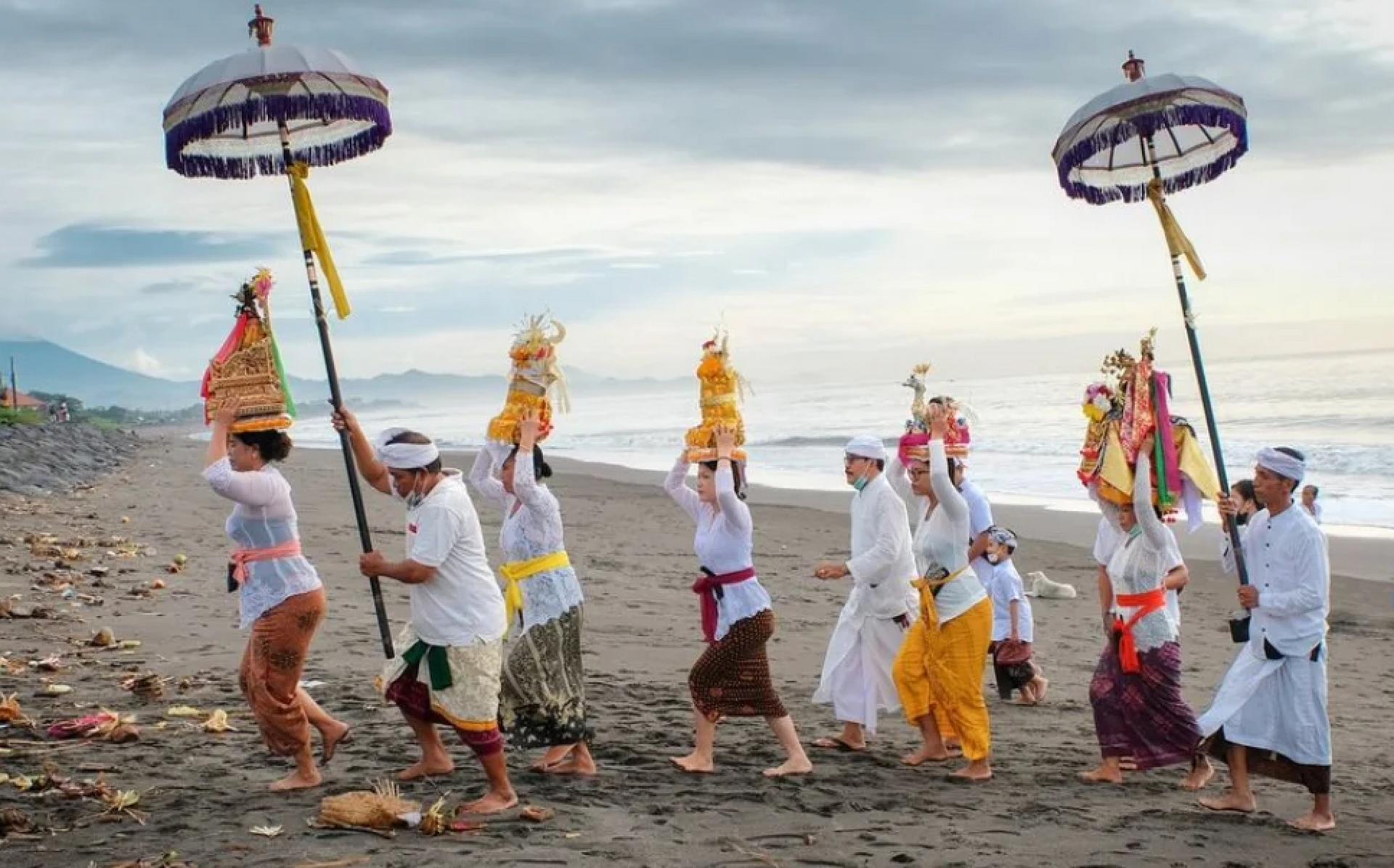
Image from fajarbali.com
A trip to Bali can unexpectedly become much more than a beach holiday. You might leave your villa one morning and find the streets decorated with tall bamboo poles. On another day, you may pass a procession dressed entirely in white, hear gamelan music coming from a village temple, or notice hundreds of small offerings appearing along the roadside. Ceremonies are part of everyday life in Bali, not performances created for visitors. Some happen according to the Balinese calendar, while others mark important moments within a family or village. Travelers are often welcome to observe certain ceremonies, and there are also cultural and spiritual traditions that visitors can experience more directly. Here are some you may encounter during your stay.
Melukat: A Traditional Purification Ritual
Melukat is a Balinese Hindu purification ritual using holy water. It is traditionally performed as a form of spiritual cleansing and can take place at temples, sacred springs, rivers, or other holy water sources. Unlike many religious ceremonies that visitors should primarily observe, Melukat is one tradition that travelers can experience themselves when visiting an appropriate location and following local guidance. Tirta Empul is perhaps the best-known place for Melukat, although purification rituals can be experienced at several sacred sites around Bali. Visitors should remember that this is a religious practice rather than simply a tourist activity. Dress appropriately, follow the correct sequence, and ask a local guide or temple attendant when unsure.
Odalan: When a Balinese Temple Comes Alive
With thousands of temples across the island, there is a good chance you will encounter an Odalan during your stay. An Odalan is a temple anniversary based on the Balinese Pawukon calendar. Depending on the temple, celebrations can include elaborate offerings, traditional clothing, gamelan music, dance, prayer, and processions. Some celebrations are relatively intimate, while major temples can become incredibly lively. Visitors may be allowed to enter certain temple areas and observe the celebration, but appropriate clothing and respectful behavior are essential. Access to sacred areas may also be restricted. If you happen to encounter an Odalan, don’t treat it as an inconvenience because a road is busy or a temple has changed its opening arrangements. It can be an unexpected opportunity to witness an important part of Balinese life.
Galungan and Kuningan: See the Island Transform
Galungan is one of the most important periods in the Balinese Hindu calendar. One of the first things visitors notice is the appearance of
penjor, beautifully decorated bamboo poles placed outside homes and along streets throughout the island. Families visit temples dressed in traditional clothing, prepare offerings, and gather together. Ten days after Galungan comes Kuningan, which marks the end of the celebration period. For travelers, simply driving through villages during Galungan can be memorable. Streets lined with penjor create a scene that looks completely different from an ordinary day in Bali. This is less about joining a single event and more about experiencing how an entire island changes during an important religious period.
Nyepi: Experience Bali in Complete Silence
Few cultural experiences anywhere in the world are quite like Nyepi. Known as Bali’s Day of Silence, Nyepi marks the Balinese Saka New Year. For 24 hours, activity across the island comes to an extraordinary pause. Roads become empty. Businesses close. People remain at home or in their accommodation, and normal travel and entertainment stop. Visitors are expected to follow the restrictions as well. You can stay at your accommodation, but you cannot go sightseeing or walk around outside. Rather than seeing this as a limitation, embrace it as part of the experience. A day without traffic, shopping, beach clubs, or sightseeing offers something increasingly rare: complete stillness.
Ogoh-Ogoh: The Spectacle Before Nyepi
If Nyepi is defined by silence, the evening before it can feel like the complete opposite. On the eve of Nyepi, communities across Bali hold processions featuring enormous figures known as Ogoh-Ogoh. These dramatic statues often represent negative forces or mythological beings. They are carried through the streets accompanied by crowds, music, and an energetic atmosphere. For travelers who happen to be in Bali at this time, watching an Ogoh-Ogoh procession can be one of the most memorable cultural experiences of the trip. Celebrations vary between villages, so ask locally about where and when processions will take place.
Mekare-Kare: The Pandan War of Tenganan
In the traditional village of Tenganan in East Bali, visitors may have the opportunity to witness one of the island’s most distinctive traditions. Mekare-Kare, often called the Pandan War, involves men facing each other ceremonially using bundles of thorny pandan leaves and shields. The tradition is associated with the village’s religious beliefs and cultural heritage and takes place as part of the Usaba Sambah festival. Although visitors may watch when the event is open to the public, it is important to remember that this is a meaningful local tradition rather than a staged attraction.
Ngaben: A Ceremony You May Encounter Unexpectedly
During your stay, you may see a large procession moving through the streets accompanied by music, elaborate structures, and people dressed in traditional clothing. It may be a Ngaben, the Balinese Hindu cremation ceremony. Despite being connected with death, a Ngaben can appear surprisingly vibrant to visitors unfamiliar with Balinese Hindu traditions. The ceremony plays an important role in the spiritual journey of the deceased and can involve extended families and entire communities. Travelers may sometimes observe a public procession from a respectful distance, but this is not a ceremony to treat as entertainment. Avoid interrupting the procession, entering private areas, or photographing people closely without permission. Sometimes the most respectful way to experience a ceremony is simply to stop, watch quietly, and allow it to pass.
What to Remember When Experiencing a Balinese Ceremony
Being invited to observe or participate in a local tradition is a privilege, and a little awareness goes a long way. Wear appropriate clothing when entering temples, including a sarong and sash when required. Follow instructions from temple attendants or local residents, and never enter areas marked as restricted. Avoid standing directly in front of people who are praying or stepping over offerings placed on the ground. When taking photographs, pay attention to what is happening around you and ask permission when photographing individuals closely. Most importantly, remember that ceremonies continue whether tourists are present or not. That authenticity is precisely what makes experiencing them so special.
Some of the most memorable experiences in Bali are the ones you never planned. You may arrive expecting beaches, waterfalls, restaurants, and temples, only to find yourself watching a village procession, walking beneath rows of penjor during Galungan, experiencing the extraordinary silence of Nyepi, or taking part in a Melukat purification ritual. You don’t need to understand every detail to appreciate what you are witnessing. Approach these moments with curiosity and respect, follow local guidance, and remember that you are being given a glimpse into traditions that remain deeply connected to everyday life on the island. When the timing is right, a Balinese ceremony can become one of those unexpected experiences you remember long after the holiday is over.

Digital Nomad in Bali: Must-Have Essentials from Co-Working Spaces to Cafes and Stellar Connectivity